
Short answer
The Mercedes-AMG ONE leads at 352 km/h, followed by the SLR Stirling Moss at 350 km/h. The SLR 722 Edition Coupe, 722 S Roadster and original Coupe complete the five.
- Highest maximum
- AMG ONE at 352 km/h
- Closest challenger
- SLR Stirling Moss at 350 km/h
- SLR engine family
- Supercharged 5.4-litre V8
Top 5 Fastest Mercedes-Benz Cars in the World (Top Speed) at a Glance
| Rank | Mercedes model | Factory maximum | Powertrain | Body |
|---|---|---|---|---|
| 01 | 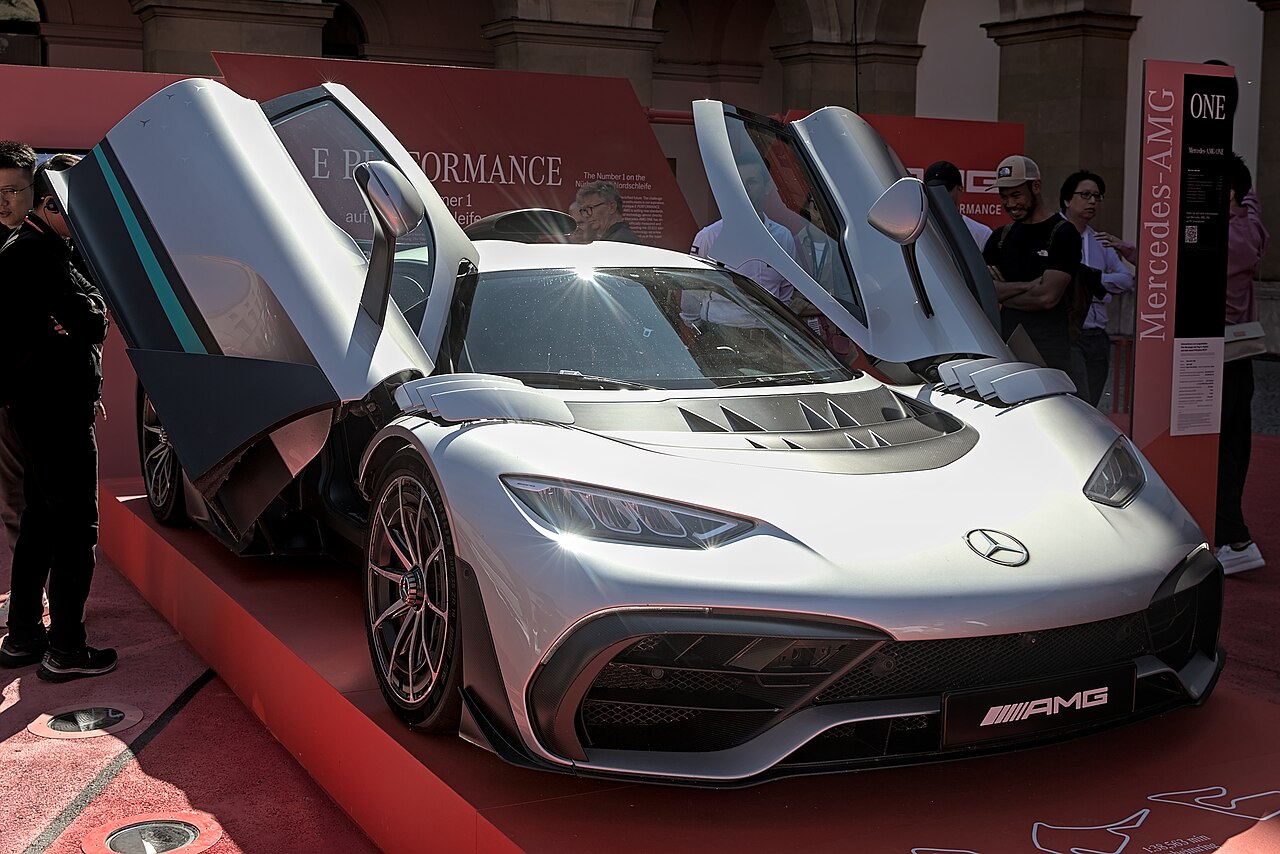 | 352 km/h | 1.6-litre V6 hybrid | Two-seat coupe |
| 02 | 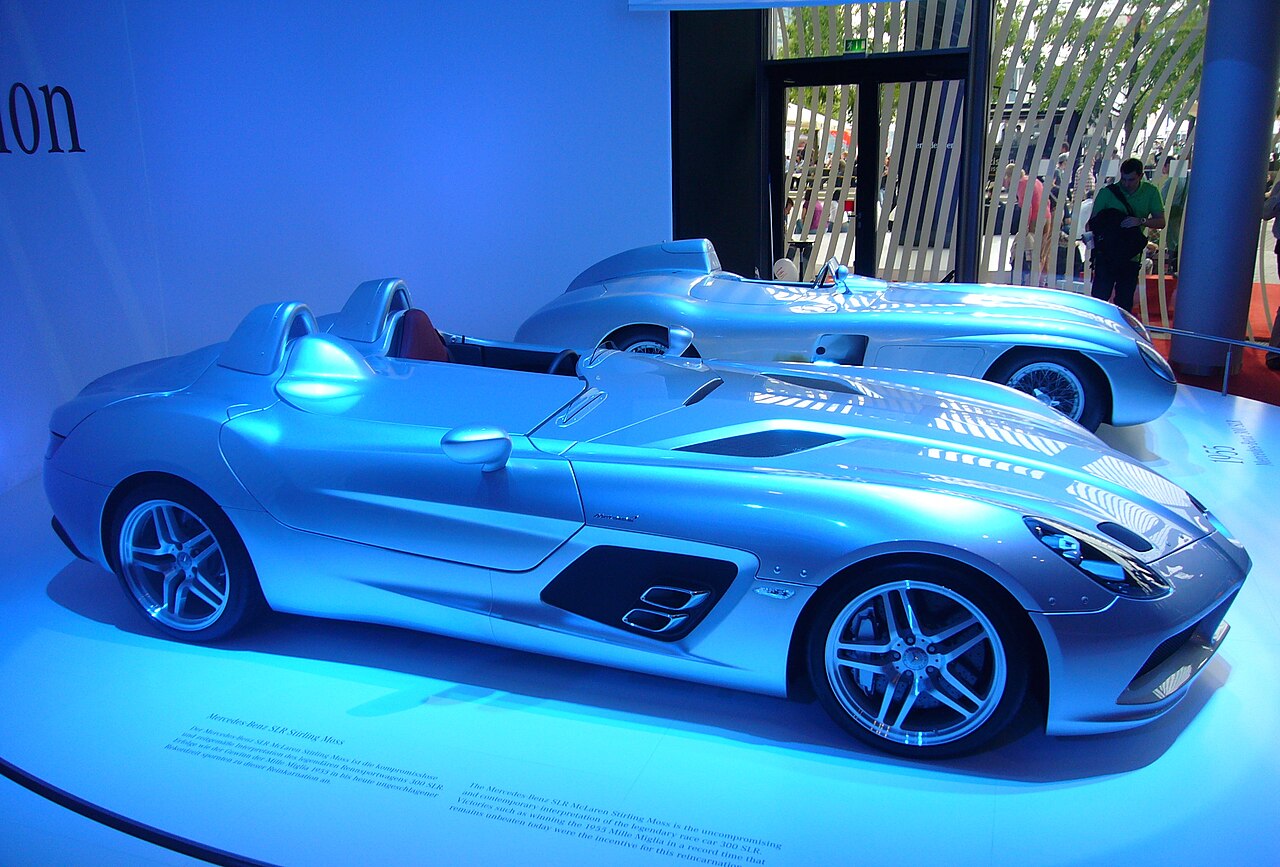 | 350 km/h | 5.4-litre supercharged V8 | Open speedster |
| 03 | 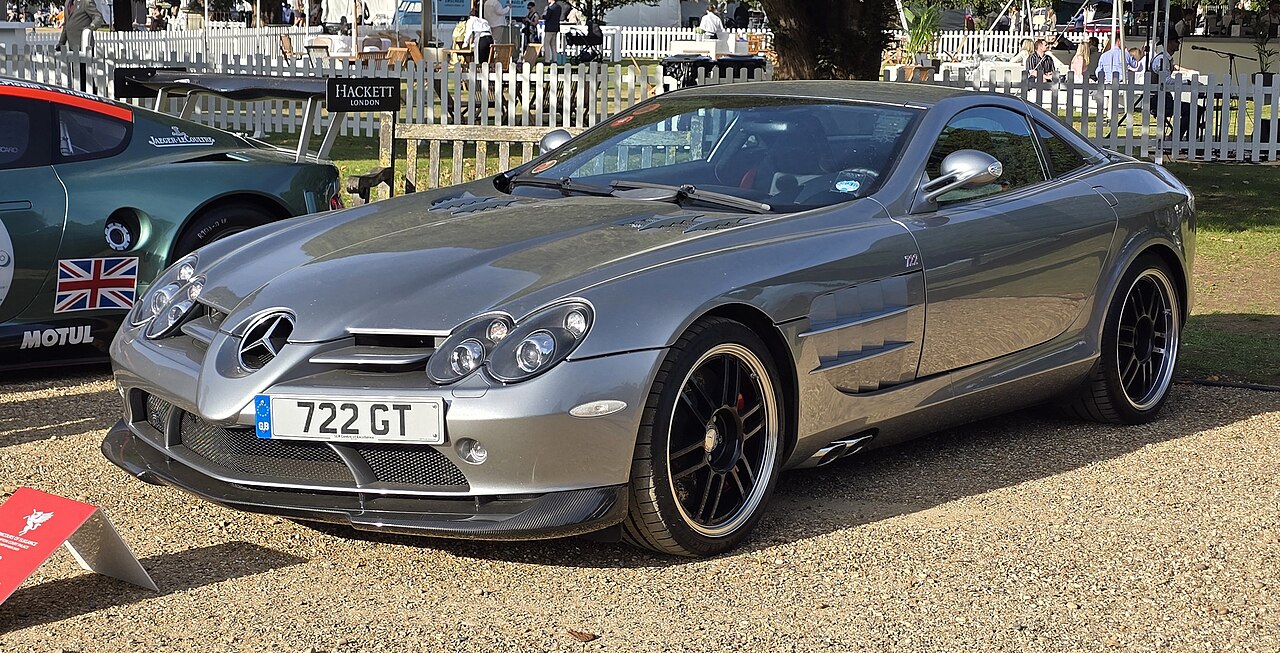 | 337 km/h | 5.4-litre supercharged V8 | Two-seat coupe |
| 04 | 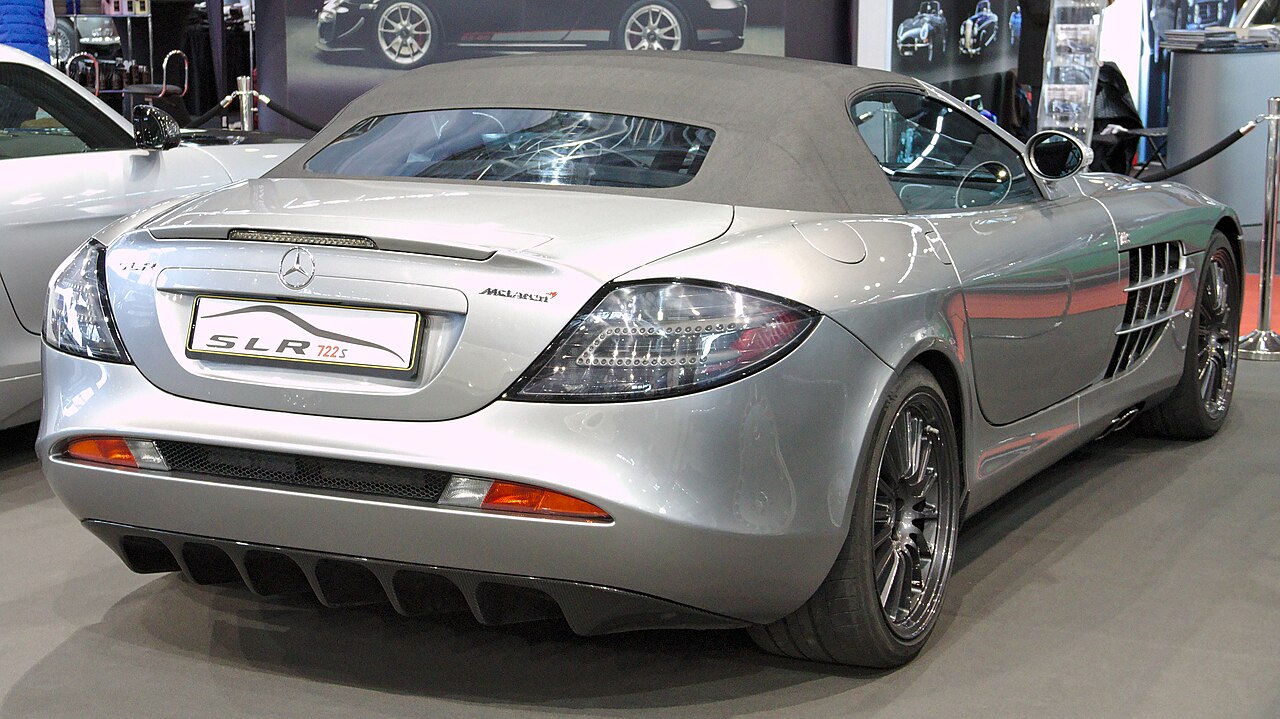 | 335 km/h | 5.4-litre supercharged V8 | Two-seat roadster |
| 05 | 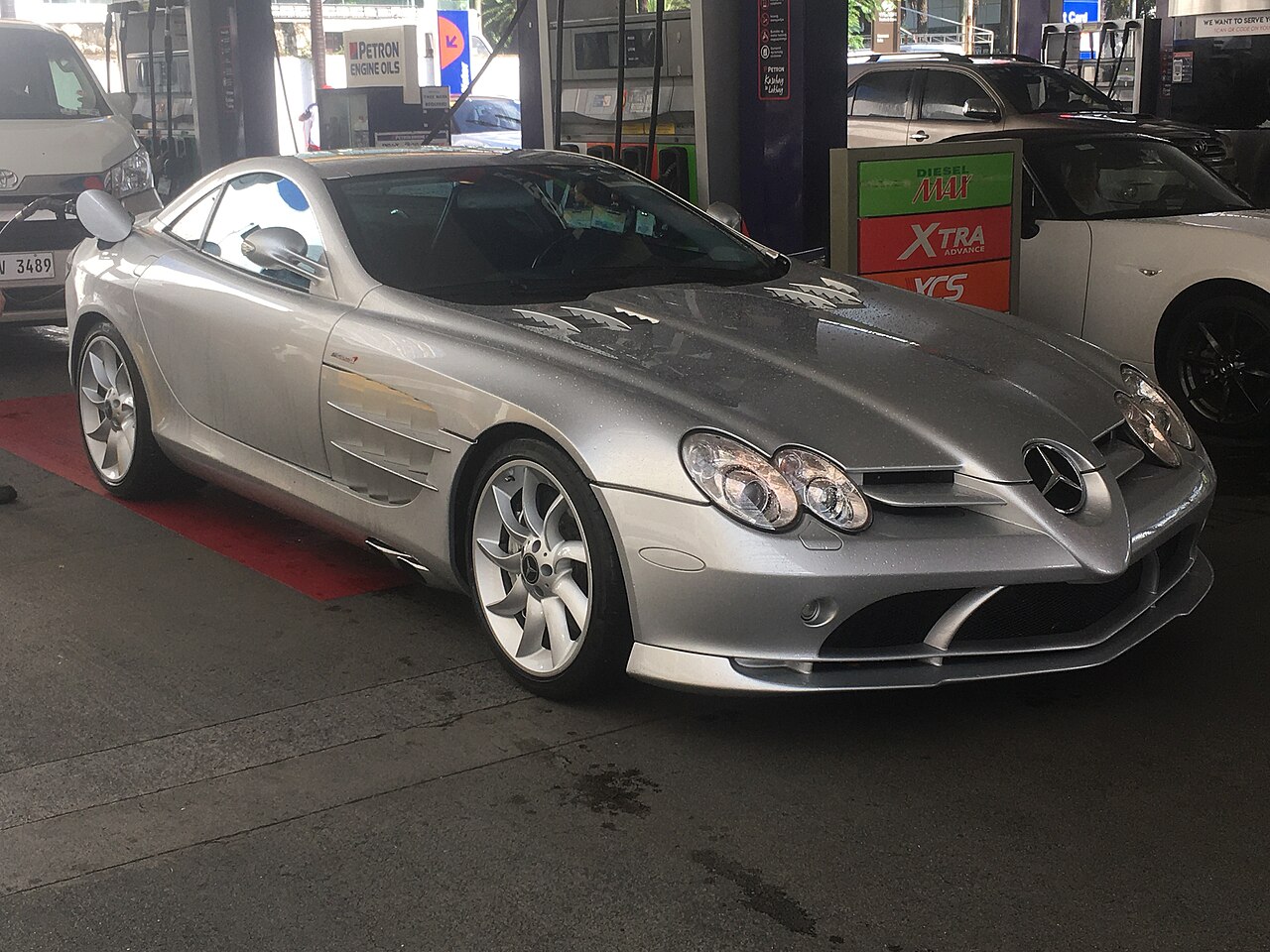 | 334 km/h | 5.4-litre supercharged V8 | Two-seat coupe |
No entries match your search.
The scale of the difference
Factory maximum in km/h
First 5 entries shown. Bar lengths compare the magnitude of the reported values.
- Mercedes-AMG ONE352 km/h
- Mercedes-Benz SLR Stirling Moss350 km/h
- Mercedes-Benz SLR McLaren 722 Edition337 km/h
- Mercedes-Benz SLR McLaren Roadster 722 S335 km/h
- Mercedes-Benz SLR McLaren Coupe334 km/h
Top 5 Fastest Mercedes-Benz Cars in the World (Top Speed): Entry Details
Mercedes-AMG ONE
Production specification, 2022A Formula One-derived turbo V6 and four electric motors put the ONE first. Its active aerodynamics accompany a 352 km/h factory maximum.
- Powertrain
- 1.6-litre V6 hybrid
- Body
- Two-seat coupe
- Factory source
- AMG ONE specifications
Mercedes-Benz SLR Stirling Moss
2009The open speedster combines the SLR’s supercharged V8 with a body lacking a roof and conventional windscreen. Its 350 km/h maximum puts it immediately behind the hybrid ONE.
- Powertrain
- 5.4-litre supercharged V8
- Body
- Open speedster
- Factory source
- Stirling Moss launch
Mercedes-Benz SLR McLaren 722 Edition
Introduced 2006The 722 Edition develops the enclosed SLR with higher engine output and chassis changes. It leads the conventional-roof SLR road variants at 337 km/h.
- Powertrain
- 5.4-litre supercharged V8
- Body
- Two-seat coupe
- Factory source
- 722 road-car comparison table
Mercedes-Benz SLR McLaren Roadster 722 S
Introduced 2008A folding fabric roof gives the 722 S open-air use while the carbon structure provides the underlying rigidity. Its factory maximum is 335 km/h.
- Powertrain
- 5.4-litre supercharged V8
- Body
- Two-seat roadster
- Factory source
- Original 2008 press release
Mercedes-Benz SLR McLaren Coupe
Introduced 2003The original SLR established the carbon-bodied, supercharged platform shared by its later derivatives. Its 334 km/h maximum keeps it close to the 722 S despite the earlier specification.
- Powertrain
- 5.4-litre supercharged V8
- Body
- Two-seat coupe
- Factory source
- SLR museum history
Top 5 Fastest Mercedes-Benz Cars in the World (Top Speed): Analysis
AMG ONE Brings Formula One Hybrid Hardware to the Road
The ONE’s electric motors support the turbocharger and propel the car, connecting energy recovery with high performance. Its carbon monocoque and active aerodynamic surfaces belong to the same engineering programme as the powertrain. The AMG identity began with combustion-engine tuning, but this flagship brings a much more complex hybrid system.
SLR Stirling Moss Removes the Roof and Windscreen
The Stirling Moss retains the SLR family’s supercharged V8 but replaces the conventional cabin with an open speedster arrangement. It evokes the 1955 racing cars through its exposed cockpit. That body is central to the car’s character, rather than an ordinary convertible roof mechanism.
SLR 722 Coupe and Roadster
The 722 Edition combines increased V8 output with chassis changes and a distinct aerodynamic specification. The 722 S takes that performance theme into the roadster body. Its fabric roof does not require a separate open-car chassis concept because the SLR’s structural carbon construction already carries the essential loads.
The Original SLR Remains Close to Its Derivatives
The original SLR Coupe reaches 334 km/h, close to the later 722 road models. Its development joined Mercedes-Benz with McLaren, using a supercharged V8, a carbon structure and a nose recalling contemporary Formula One design. The later derivatives developed that foundation rather than replacing the powertrain family.
Our verdict
Our verdict
AMG ONE leads by its published maximum and offers the most elaborate powertrain here. Stirling Moss is the closest challenger but sacrifices a conventional enclosed cabin. The original SLR Coupe supplies the core carbon-bodied grand-touring idea shared by the later 722 cars.
Strengths
- ONE combines energy recovery with active aerodynamic hardware.
- The SLR family retains a common supercharged V8 foundation.
Things to consider
- Stirling Moss has no conventional roof or windscreen.
- The 722 road editions and track-only 722 GT are distinct cars.
FAQ: Top 5 Fastest Mercedes-Benz Cars in the World (Top Speed)
What is the fastest Mercedes-Benz road car in this comparison?
The Mercedes-AMG ONE reaches 352 km/h. Its hybrid system combines a turbocharged V6 with four electric motors.
How fast is the Mercedes SLR Stirling Moss?
Its published maximum is 350 km/h. It uses the supercharged SLR V8 in an open speedster body without a conventional windscreen.
What is the SLR 722 Edition top speed?
The Coupe reaches 337 km/h. The 722 S Roadster has a separate 335 km/h factory specification.
What does 722 mean on a Mercedes SLR?
It recalls the 7.22 am start time of Stirling Moss and Denis Jenkinson in the 1955 Mille Miglia. The number identifies a special SLR edition.
Does the Mercedes-AMG ONE have a V8?
No. The ONE uses a turbocharged 1.6-litre V6 with electric assistance. The four SLR variants below it use a supercharged V8.
Is the SLR 722 GT the same as the 722 Edition?
No. The 722 GT is a track car. The road-going 722 Edition Coupe is the 337 km/h model included here.
Sources & methodology
Factory maxima through October 2026 cover separate road variants and exclude tuners, racers and prototypes. SLR editions count separately, with the 722 S figure taken from an archived original factory release.
Maintained by Artsiom Dusau, a software engineer and BMW 4 Series owner. Editorial policy