
Short answer
Rolls-Royce uses a direct translation from sculpture to graphic identity. Its Spirit of Ecstasy became a two-dimensional expression, while Mercedes-Benz and Bentley also use emblems that work beyond an upright hood ornament.
- Data period
- Documented historical emblem milestones
- Entries
- 3
- Comparison
- Order described in methodology
- Topic
- Logos & hidden meanings
Car Hood Ornaments and Graphic Emblems at a Glance
| Brand or identity | Symbol or milestone | Connection |
|---|---|---|
 | Spirit of Ecstasy expression | Sculpture adapted for corporate identity |
 | Star drawing and upright star | Graphic origin before upright ornament |
 | Flying B and Winged B | Related mascot and graphic badge |
No entries match your search.
Car Hood Ornaments and Graphic Emblems: Entry Details
Rolls-Royce
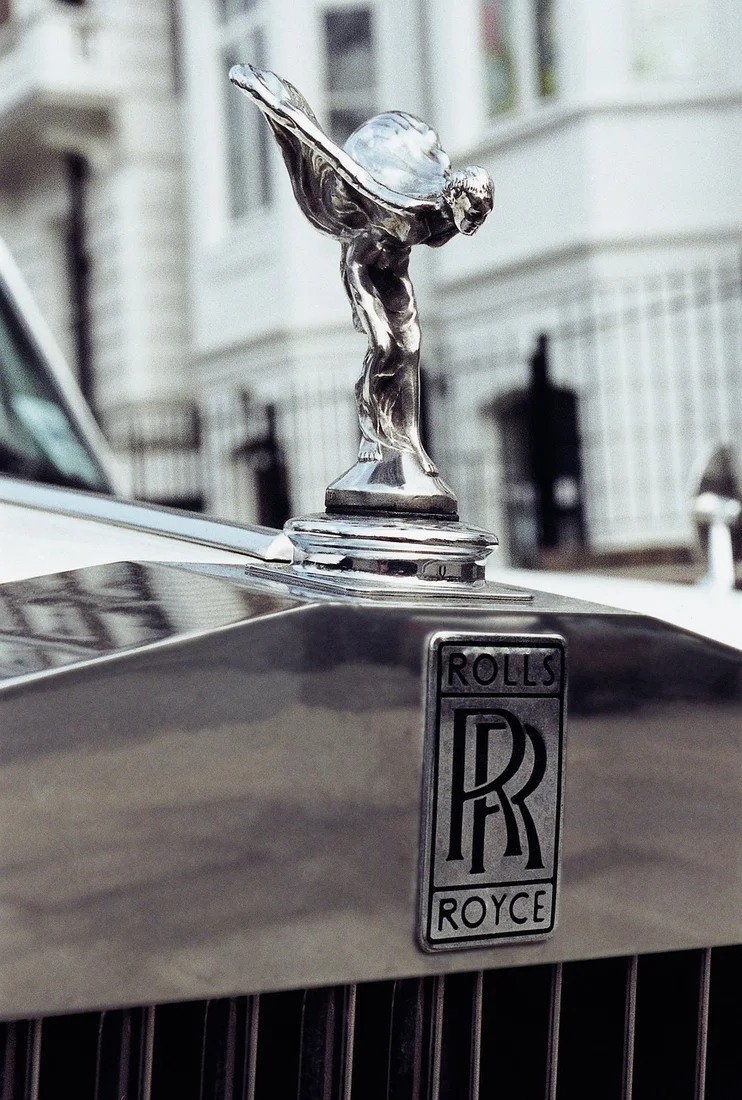
1911 mascot and 2020 graphic expression · Spirit of Ecstasy expressionThe sculpted figure supplied a flowing two-dimensional brand element. Both forms continue to serve different physical and graphic settings.
- Connection
- Sculpture adapted for corporate identity
Mercedes-Benz
1909 symbol and 1921 ornament application · Star drawing and upright starA graphic symbol preceded the familiar radiator-cap ornament. Its history runs from drawing to sculpture as well as back to flat applications.
- Connection
- Graphic origin before upright ornament
Bentley
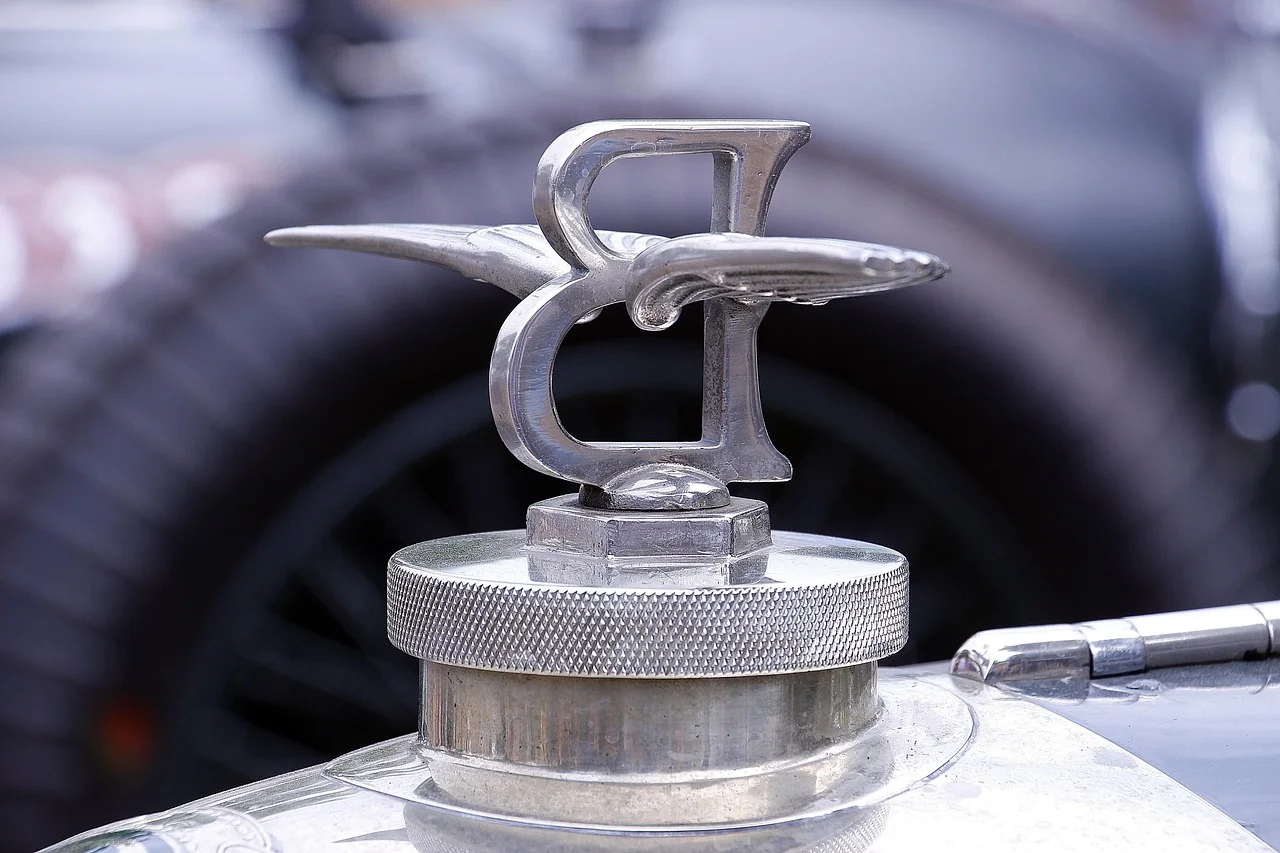
Historic badges and modern Flying Spur mascot · Flying B and Winged BThe bonnet mascot and feathered graphic badge are related parts of Bentley identity. Their different shapes suit different locations on a car.
- Connection
- Related mascot and graphic badge
Car Hood Ornaments and Graphic Emblems: Analysis
Rolls-Royce Spirit of Ecstasy as a Graphic
Rolls-Royce adapted the Spirit of Ecstasy for surfaces that cannot carry a sculpture. The flowing graphic expression extends the figure into corporate identity while the physical mascot remains above the grille. The Rolls-Royce emblem history distinguishes that figure from the separate double-R badge.
Mercedes-Benz Star as a Hood Ornament
Mercedes took a different path. The drawn star existed before the upright radiator emblem was registered for that use in 1921. A flat star therefore belongs to the symbol’s early history, rather than being a recent replacement for the ornament.
Bentley Flying B vs Winged B
Bentley’s Flying B is a bonnet mascot, while the Winged B is its graphic badge. The Bentley logo history follows both forms, which share a letter without being the same design. A mascot can project upward while a badge sits against the bodywork.
FAQ: Car Hood Ornaments and Graphic Emblems
Was the Spirit of Ecstasy replaced by a flat logo?
The physical figure remains. Rolls-Royce added a graphic expression for corporate identity and other applications beyond the bonnet.
When did the Spirit of Ecstasy originate?
Its design was registered as Rolls-Royce intellectual property in 1911. Later versions altered its proportions and stance.
Was the Mercedes star originally a hood ornament?
The protected graphic symbol dates to 1909. Mercedes later applied to protect the star in a ring expressly as a three-dimensional radiator figure in 1921.
Are Bentley’s Flying B and Winged B the same?
They are related symbols with different forms. The Flying B is a projecting mascot, while the Winged B is a graphic badge.
Why can a brand use a mascot and a flat emblem together?
Rolls-Royce uses sculpture on the car and a graphic expression in its wider identity. The same figure can be recognised across surfaces with very different physical requirements.
Sources & methodology
Manufacturer histories document the relationship between mascots and graphic marks.
Maintained by Artsiom Dusau, a software engineer and BMW 4 Series owner. Editorial policy