
Short answer
Citroën is an example because the chevrons preserve the shape of gear teeth from André Citroën’s earlier business. Peugeot translated tool qualities into an animal, while Volvo borrowed a material symbol to evoke Swedish steel.
- Data period
- Historical emblem origins and documented redesigns
- Entries
- 3
- Comparison
- Editorial order
- Topic
- Logos & hidden meanings
Car Logos With Industrial Origins at a Glance
| Brand | Emblem or meaning | Origin |
|---|---|---|
 | Herringbone gear teeth | Double-helical gearing |
 | Saw-blade qualities | Strength, flexibility and cutting speed |
 | Iron symbol | Swedish iron and steel traditions |
No entries match your search.
Car Logos With Industrial Origins: Entry Details
Citroën
1919 automobile emblem · Herringbone gear teethThe paired chevrons preserve a mechanical form from the founder’s gear business. A manufactured part supplied the visual language.
- Origin
- Double-helical gearing
Peugeot
Historic tool trademark · Saw-blade qualitiesThe lion promoted tools through a comparison with its teeth, spine and speed. The image survived the move into automobiles.
- Origin
- Strength, flexibility and cutting speed
Volvo
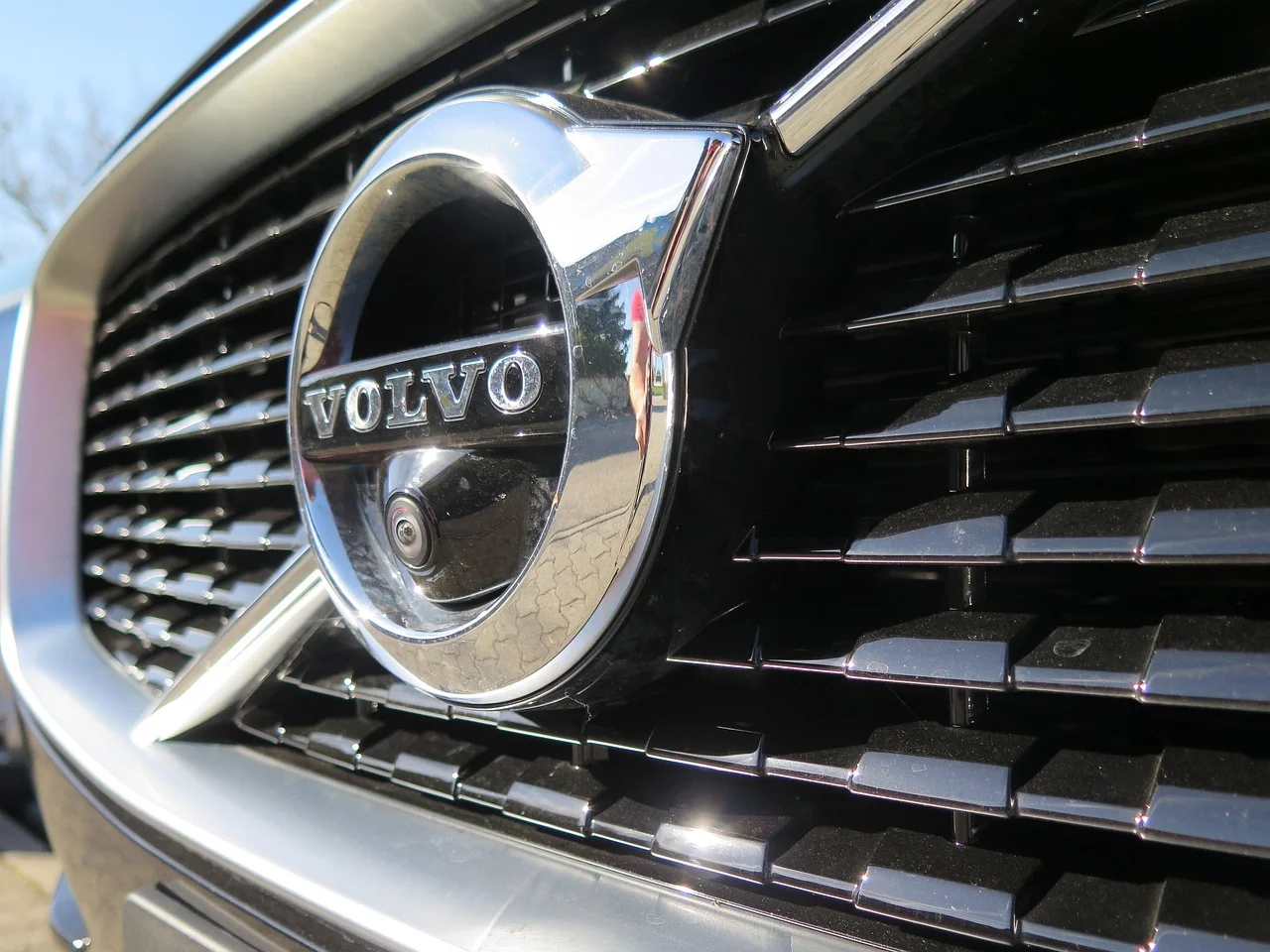
1926 emblem adoption · Iron symbolThe circle and arrow evoke the Swedish iron industry. A diagonal band added for mounting later became part of the visual identity.
- Origin
- Swedish iron and steel traditions
Car Logos With Industrial Origins: Analysis
Citroen Chevrons and Herringbone Gears
Citroën’s badge turns a working mechanical shape into a trademark. The paired chevrons refer to herringbone gearing, so the logo retains a piece of the business André Citroën ran before making cars.
Peugeot Lion and Saw-Blade History
Peugeot’s lion supplied an animal analogy for tools. Strong teeth, a supple spine and quick movement made the case for the saws’ strength, flexibility and cutting speed. The Peugeot emblem history follows the mark into automotive use.
Volvo Iron Symbol and Swedish Steel
Volvo adopted the old iron symbol to connect its cars with Swedish metalworking traditions. The meaning points to the material and its associations with strength rather than to a specific component.
Volvo’s diagonal grille band began as a practical way to hold the badge in place. The Volvo logo history shows how a mounting solution became a recognisable part of the car’s face.
FAQ: Car Logos With Industrial Origins
Why does Citroën use two chevrons?
The chevrons come from herringbone gear teeth. André Citroën used the shape to link his automobile company with his earlier gear-making success.
Was the Peugeot lion first used on cars?
Peugeot used the lion on tools and saws before it became an automobile emblem. Its original message concerned the qualities of those products.
What does Volvo’s circle and arrow mean?
Volvo adopted the historic iron symbol to evoke Swedish metalworking and strong steel. The shape predates the car company.
Why does Volvo have a diagonal grille line?
The diagonal band originally held the badge in place. Volvo kept it as a visual signature after that practical role became part of the car’s appearance.
Which car emblem most directly resembles a manufactured part?
Citroën’s double chevron is the clearest example here. Its shape refers directly to gear teeth, while Peugeot uses an animal comparison and Volvo a material symbol.
Sources & methodology
Citroën, Peugeot and Volvo histories establish the industrial origins, including materials and tool symbolism.
Maintained by Artsiom Dusau, a software engineer and BMW 4 Series owner. Editorial policy