
Short answer
Mercedes-Benz comes first with the three-pointed star introduced in 1909. Alfa Romeo’s cross and serpent followed in 1910, while BMW, Bentley and MG kept other early visual ideas through successive redesigns.
- Data period
- Documented historical emblem milestones
- Entries
- 5
- Comparison
- Order described in methodology
- Topic
- Logos & hidden meanings
Historic Car Emblems Still Used Today at a Glance
| Order | Brand or identity | Symbol or milestone | Connection |
|---|---|---|---|
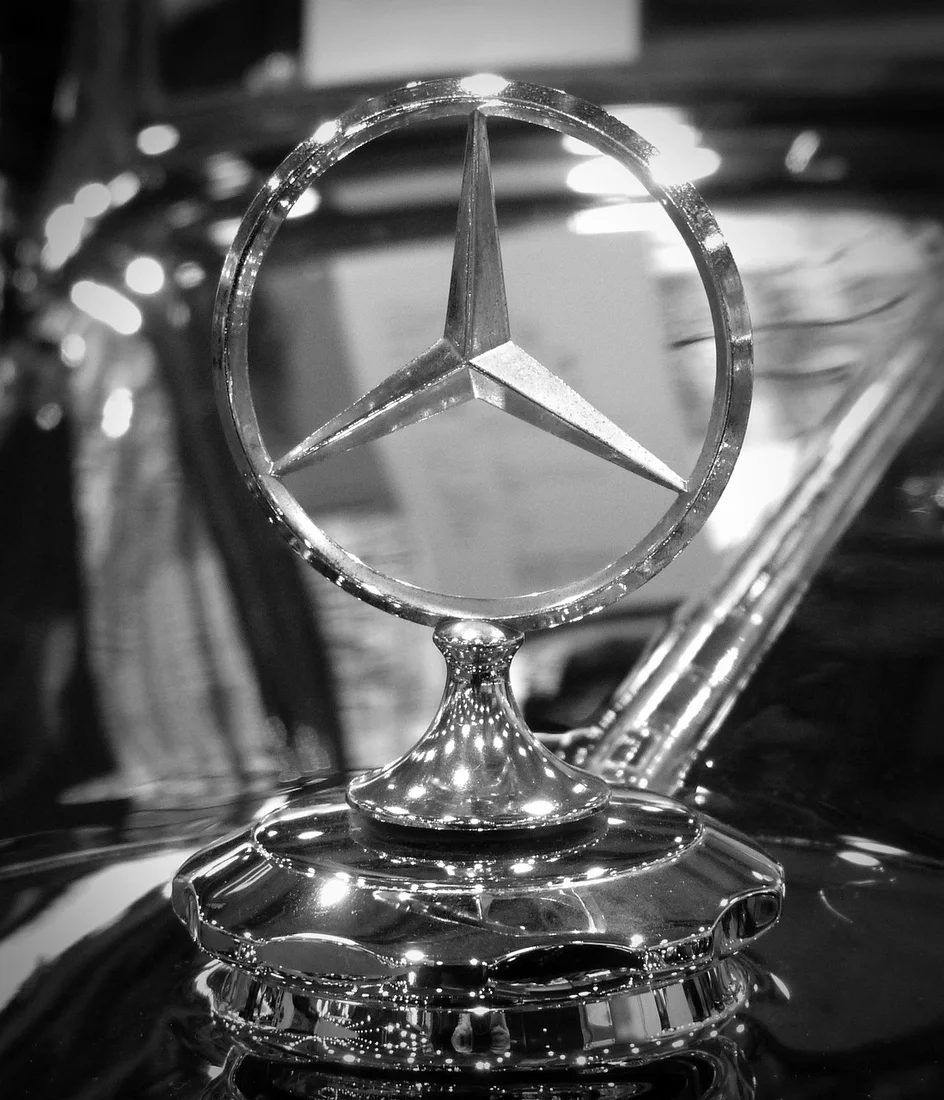
| 01 |  | Three-pointed star | Land, water and air |
| 02 |  | Cross and Biscione | Milan cross and Visconti serpent |
| 03 |  | Blue-and-white roundel | Bavarian colours |
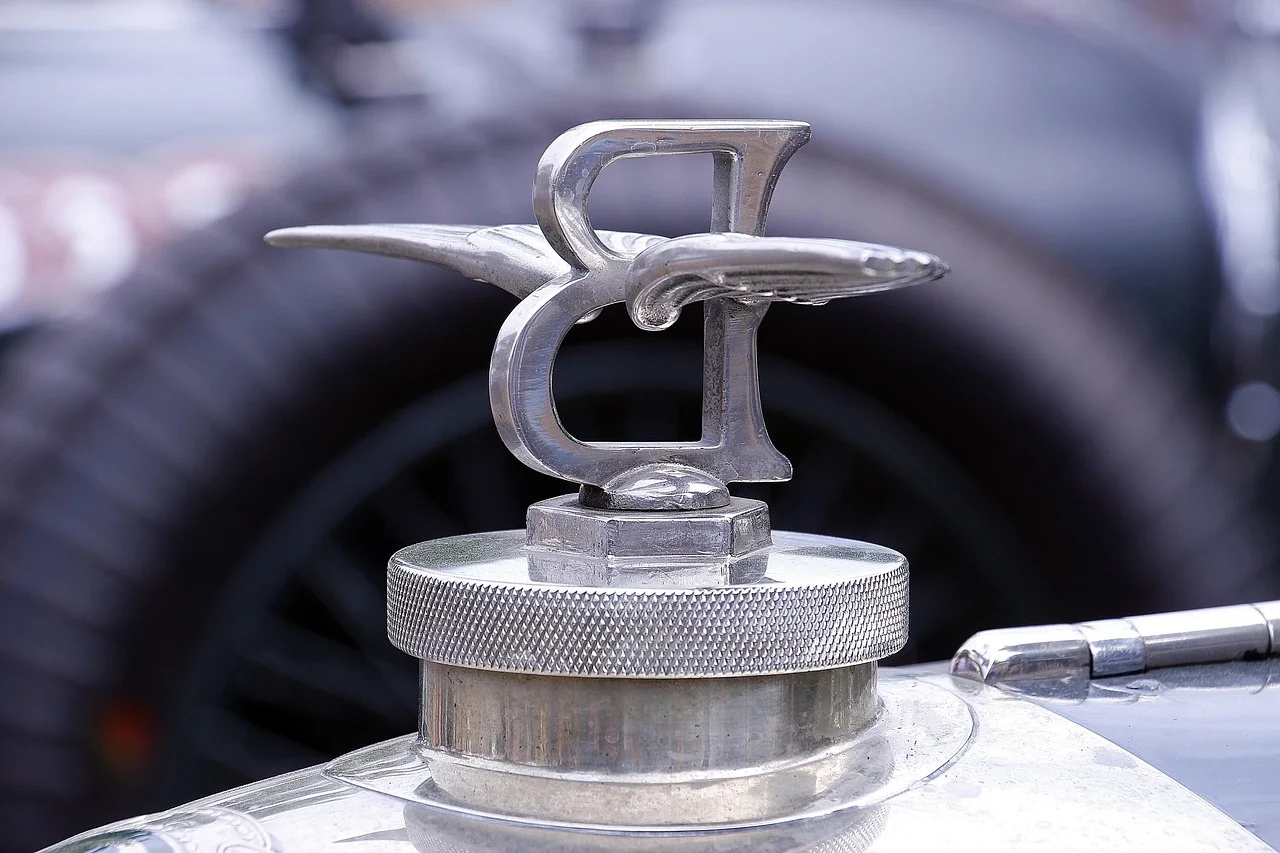
| 04 |  | B with feathered wings | Letter and wing combination |
| 05 |  | MG octagon | Angular letters within an octagon |
No entries match your search.
Historic Car Emblems Still Used Today: Entry Details
Mercedes-Benz
1909 trademark application · Three-pointed starA star linked to the Daimler family became a sign for mobility in three environments. Later rings and wreaths changed its frame.
- Connection
- Land, water and air
Alfa Romeo
1910 original emblem · Cross and BiscioneTwo Milanese symbols remained as ALFA became Alfa Romeo. Their pairing carries the identity even when the lettering changes.
- Connection
- Milan cross and Visconti serpent
BMW
1917 original logo · Blue-and-white roundelThe circular mark kept its central colour pattern through later revisions. That centre identifies the brand before the letters are read.
- Connection
- Bavarian colours
Bentley
1919 original design · B with feathered wingsF. Gordon Crosby created the original combination. The wings were revised again in 2025 while retaining the central B.
- Connection
- Letter and wing combination
MG
1924 trademark registration · MG octagonThe octagon supplies an immediately distinct border around the initials. Its documented trademark milestone belongs to the Oxford beginnings of MG.
- Connection
- Angular letters within an octagon
Historic Car Emblems Still Used Today: Analysis
Mercedes-Benz Star History
Mercedes gave its star a purpose beyond one vehicle. Its three points represented engines operating on land, water and in the air, so the symbol could travel across products without depending on a particular grille or body shape.
Alfa Romeo and BMW Emblem History
Alfa Romeo retained Milan’s cross and Visconti serpent while its surrounding lettering changed. The Alfa Romeo logo history follows a badge whose local references outlasted the original company name.
BMW’s roundel preserved its blue-and-white centre. The BMW emblem history explains why that familiar colour arrangement remains recognisable even when the outer ring and lettering are revised.
Bentley and MG Logo History
Bentley’s B and wings survived changes in feather shape and balance. Its new 2025 emblem makes those wings sharper, showing how a familiar combination can accommodate a substantially different drawing.
MG uses a different kind of continuity. The angular letters fit inside an octagon, giving the badge a distinctive outline as well as a short name.
FAQ: Historic Car Emblems Still Used Today
When was the Mercedes star first registered?
Daimler-Motoren-Gesellschaft applied to protect the three-pointed star in 1909. The combined Mercedes-Benz badge developed later, around the merger with Benz.
Has the Alfa Romeo logo always used a serpent?
The Biscione was part of the original 1910 emblem alongside Milan’s cross. Surrounding names and decorative details were revised.
How old is the BMW roundel?
Its original logo dates to 1917. The blue-and-white centre remained while later versions changed the outer ring and finish.
Did Bentley change its wings recently?
Bentley announced a new Winged B in 2025. The B and feathered wings remain, with a sharper outline and revised central detail.
When was the MG octagon trademark registered?
MG identifies May 1924 as the octagon’s trademark registration milestone. The mark connects the modern brand with Morris Garages in Oxford.
Sources & methodology
Selected emblem families are ordered by documented origin or trademark date in manufacturer histories. Continuity refers to the core symbol, not an unchanged drawing or an exhaustive global age record.
Maintained by Artsiom Dusau, a software engineer and BMW 4 Series owner. Editorial policy