

Brand slogan
BMW Slogan
“The Ultimate Driving Machine” 1970s
Company history
BMW Logo History

BMW traces its roots to two Munich aero-engine firms. Karl Rapp founded Rapp Motorenwerke in 1913, and BMW acknowledges him as an indirect founder. The firm was renamed Bayerische Motoren Werke in 1917, when Franz Josef Popp and engineer Max Friz were turning its straight-six aircraft engine into the BMW IIIa. In 1922 the name and engine assets passed to Bayerische Flugzeugwerke, the successor of Gustav Otto's aircraft works, and that company became the BMW AG of today.
After World War I BMW moved into motorcycles with the R32 of 1923 and into cars in 1928 by taking over Fahrzeugfabrik Eisenach and its licensed Austin 7, sold as the Dixi. Postwar bans, heavy bombing and the loss of its eastern plants left the company close to takeover by Daimler-Benz in 1959, until a large investment by Herbert and Harald Quandt kept it independent. Today BMW is headquartered in Munich and also owns Mini and Rolls-Royce, with the Quandt family still a long-term shareholder.
People behind the identity
Key People Behind BMW
Hover or tap a card to discover each person's contribution.

Manufacturing heritage
From Milbertshofen to four continents.
- Then
- Rapp engine works in Milbertshofen
- Now
- Plants on four continents
Name origin
Why it's called BMW

The story behind the mark
BMW Logo Meaning
The blue and white quarters are often explained as a propeller. The record points to Bavaria instead.
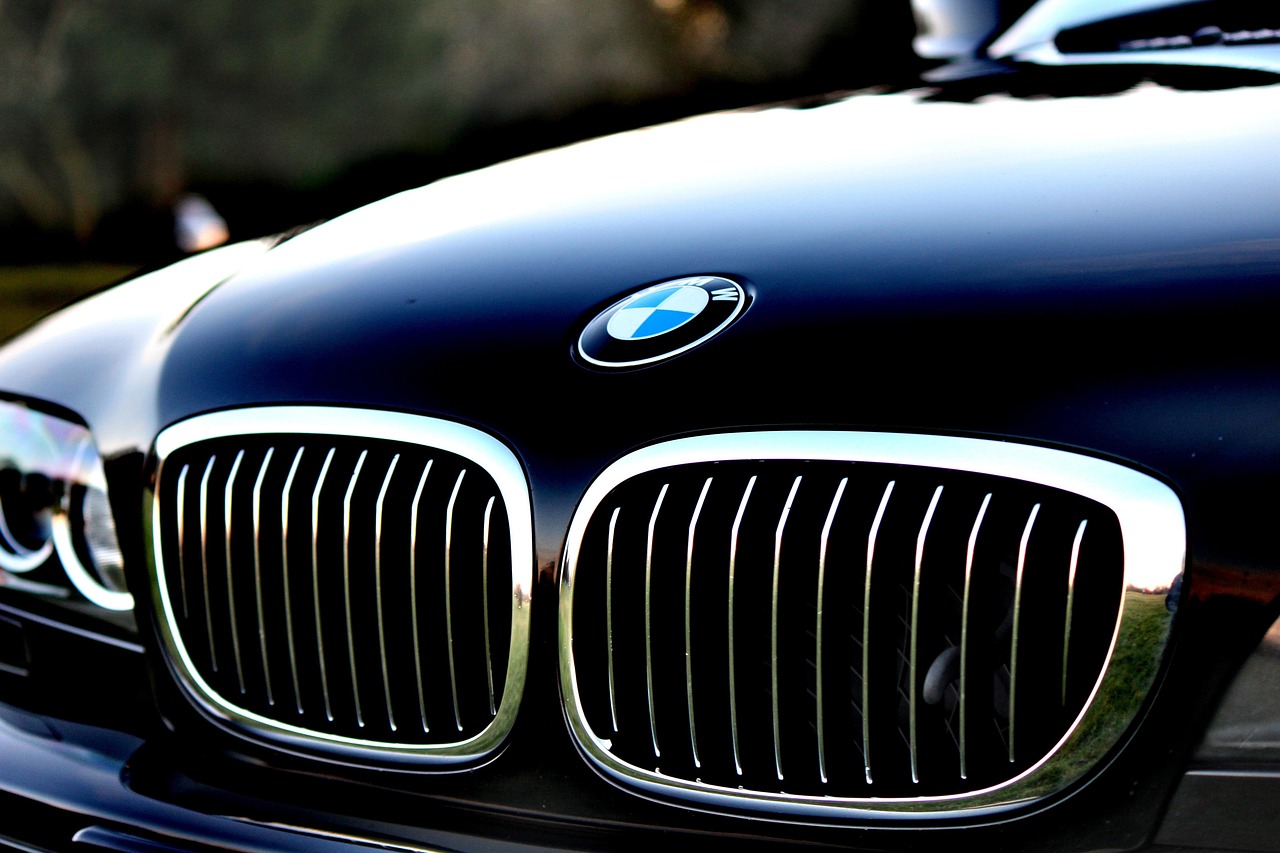
The roundel evolved from the circular Rapp Motorenwerke emblem, which showed a horse head on a plinth inside a black ring with the company name. BMW kept the black ring and its lettering and filled the center with blue and white quarters, reminiscent of the coat of arms and flag of Bavaria. The lozenge pattern of the Bavarian arms is missing because local laws at the time forbade the use of state coats of arms on commercial logos.
The propeller reading did not come from the original design. It likely stems from a 1929 BMW advertisement that placed the logo over a rotating propeller, and Wikipedia notes that the logo predates that ad by twelve years.
Who Designed the BMW Logo?
No individual designer is credited in the sources used for this page. History of BMW says only that the name change in 1917 made management devise a new logo at that time.
Interactive logo decoder
The BMW Roundel

The black ring
The black ring is inherited from the Rapp Motorenwerke emblem, which BMW kept when it adopted the new name. It frames the whole badge and carries the lettering.
Highlighted on the logoThe BMW letters
The initials of Bayerische Motoren Werke are set in white capitals that follow the curve of the upper ring. In the 1963 version they are bold and widely spaced.
Highlighted on the logoBlue and white quarters
The quartered disc is reminiscent of the Bavarian coat of arms and flag. The propeller reading is a later myth tied to a 1929 advertisement rather than the original intent.
Highlighted on the logoIdentity system
BMW Logo Font and Colors
Typography
BMW Logo Font
Custom BMW roundel lettering · Wide-spaced capitals on an arcThe three letters B, M and W sit apart on the upper curve of the ring. The archived versions change style across the years, from gold serif capitals in the early roundels to slab serifs in 1953, bold sans-serif capitals from 1963 and thin gray sans-serif letters in 2020. No source names a published typeface for any of them, so this page treats them as custom artwork.
Logo palette
BMW Logo Colors
Select a swatch to copy its HEX value. Values reference archived artwork unless official guidelines are cited.
#0066B2The two blue quarters of the 2020 roundel, sampled from the archived logo file. Earlier versions used lighter or more saturated blues.
#707070The thin outer ring and the BMW letters in the 2020 flat version, replacing the black ring.
#121212The solid ring of the 1963 roundel that held the white lettering and survived into the 3D versions.
#FFFFFFThe two white quarters and the letters of the black-ring versions.
At a glance
BMW Brand Profile
- Founded
- 1916
- Founder
- Karl Rapp
- Headquarters
- Munich, Bavaria, DE
- Category
- Luxury vehicles
- Key models
- 3/15, 328, Isetta, 507, M1, 3 Series
- Official site
- Visit official site
Geography
Where BMW was born
Rapp Motorenwerke started in Munich-Milbertshofen in 1913, and BMW's tower and plant still stand in the same part of the city. Coordinates are approximate at the city-district level.
World map
BMW among 394 car brand logos
Detroit, Stuttgart, Toyota City and Modena reveal how vehicle identities cluster around industrial centres.
Browse logos by country9 versions · 107 years
BMW Logo Evolution Timeline

1913: The Rapp Motor emblem
Rapp Motorenwerke used a black ring reading RAPP and MOTOR around a horse head on a plinth, flanked by two stars. BMW later kept the ring but not the horse.

1917: The first BMW roundel
When Rapp Motorenwerke became Bayerische Motoren Werke, the horse head gave way to blue and white quarters. The ring was black with gold-colored lettering and a gold rim.

1933: Gold rim and heavier letters
This archived version has a darker gold rim and heavier serif capitals on the black ring, with a bright blue and white center. It shows how the badge was redrawn for the car and motorcycle era.

1953: Silver letters and light cyan
The lettering turned silver-gray with slab serifs and the blue quarters became a light cyan, with a thin gray keyline around the disc. The black ring stayed.
1963: The modern flat roundel
Bold white sans-serif capitals replaced the serifs and the blue became a mid sky blue. This black ring version is the one most drivers know from decades of hoods and wheel centers.

1997: The 3D chrome roundel
A rendered version added gradients, a chrome-like rim and shaded blue and white quarters for a glossy, dimensional look suited to screens and printed material.

2020: Flat, transparent and open
The 2020 redesign removed the 3D effects and the black outline, so the ring is a thin gray line with a transparent center. The archive also holds simplified variants with only the blue quarters. Wikipedia notes the logo is used in brand communications but not on vehicles.
1913 → 2020
Old BMW Logo vs Newer Versions
20201913Model archive
Most Iconic BMW Cars
Specifications and generations: BMW 3 Series
Best and worst years: BMW 3 Series
Hover or tap a card to read why it matters.
Specs, years and generations
BMW Models
- BMW 3 Series1984–2026
- BMW 2 Series2014–2027
- BMW 4 Series2014–2027
- BMW 5 Series1984–2027
- BMW 7 Series1984–2027
- BMW i52024–2027
- BMW i72023–2027
- BMW iX32027–2027
- BMW M22016–2027
- BMW M31989–2027
- BMW M42015–2027
- BMW M51991–2027
Best and worst years
- BMW X5Recalls and crash ratings by year
- BMW 3 SeriesRecalls and crash ratings by year
- BMW 5 SeriesRecalls and crash ratings by year
- BMW X3Recalls and crash ratings by year
- BMW 7 SeriesRecalls and crash ratings by year
- BMW X6Recalls and crash ratings by year
- BMW X4Recalls and crash ratings by year
- BMW Z4Recalls and crash ratings by year
Browse by feature
BMW Logo in Collections
BMW knowledge test
How well do you know the BMW roundel?
Five quick questions about the roots of BMW, its badge and its cars.
Question 1
Which company's black ring emblem did the BMW roundel evolve from?
The roundel evolved from the Rapp Motorenwerke logo, a black ring bearing the company name around a horse head on a plinth.
Question 2
What do the blue and white quarters of the roundel recall?
The quarters are reminiscent of the Bavarian arms and flag, though the lozenge pattern was left out because state coats of arms could not be used on commercial logos.
Question 3
Where does the propeller myth likely come from?
A 1929 BMW advertisement superimposed the logo on a rotating propeller, but the logo itself dates from 1917.
Question 4
What was the first car sold as a BMW?
The 3/15 was a rebadged Dixi, the Austin 7 built under licence in Eisenach, sold as a BMW from 1929.
Question 5
Which family's 1959 investment saved BMW from bankruptcy?
Herbert and Harald Quandt invested heavily in 1959, when slow luxury sales left BMW nearly taken over by Daimler-Benz.
Quiz complete
0 of 5 correct
Tool
Compare BMW With Mercedes-Benz
Age, country, shape and redesigns — side by side.
Frequently asked questions
BMW Logo FAQ
What does the BMW logo mean?
The roundel combines a ring carrying the letters BMW with blue and white quarters. The quarters are reminiscent of the Bavarian coat of arms and flag, and the ring comes from the earlier Rapp Motorenwerke emblem. The company has not published a deeper symbolic reading.
What was BMW's first logo?
The first BMW roundel appeared in 1917 with blue and white quarters inside a black ring. Its direct ancestor was the Rapp Motor emblem, a horse head on a plinth inside a black ring, which BMW replaced in the center but kept as a ring.
What does BMW stand for?
BMW stands for Bayerische Motoren Werke, which translates as Bavarian Motor Works. The name was adopted in 1917 and later passed to Bayerische Flugzeugwerke in 1922.
Where are BMW cars made?
Complete cars are built in Munich, Dingolfing, Regensburg and Leipzig in Germany, and in Spartanburg in the United States, San Luis Potosí in Mexico, Shenyang in China, Rosslyn in South Africa and Debrecen in Hungary. Several other countries assemble cars from kits, and motorcycles are built in Berlin.
References
BMW Logo Sources and Notes
- Wikipedia — BMW
- Wikipedia — History of BMW
- Wikipedia — Karl Rapp
- Wikipedia — Rapp Motorenwerke
- Wikipedia — Gustav Otto
- Wikipedia — Chris Bangle
- Wikipedia — Jochen Neerpasch
- Wikipedia — Giorgetto Giugiaro
- Wikipedia — Oliver Zipse
- Wikipedia — BMW 3/15
- Wikipedia — BMW 328
- Wikipedia — BMW Isetta
- Wikipedia — BMW 507
- Wikipedia — BMW M1
- Wikipedia — BMW 3 Series
- Wikipedia — BMW Headquarters
Logo images are presented as an educational reference archive. Trademarks and marks belong to their respective owners.
 9ff
 ABT
 Alpina
 Apollo
 Artega
 Audi
 Bentley
 Cadillac

 DS

 Hongqi
 Jaguar

 Lexus

 Maserati
 Aston Martin
 Citroën
 Mazda
 Chevrolet
 GMC