

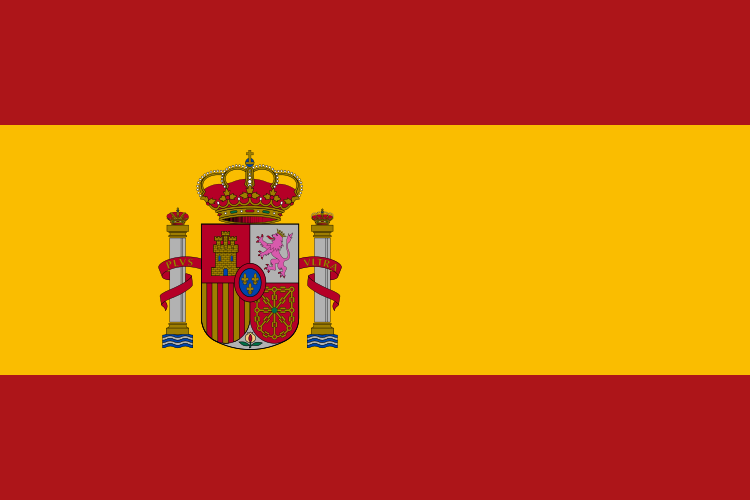
Company history
Hispano-Suiza Logo History

Marc Birkigt, a Swiss engineer, worked in Barcelona for the La Cuadra firm from 1898 or 1899. After several bankruptcies and changes in ownership, the businessmen Damián Mateu and Francisco Seix financed a new company, La Hispano-Suiza Fábrica de Automóviles, on 14 June 1904. Hispano-Suiza opened a French assembly plant in 1911, moved to Bois-Colombes in 1914, and during World War I turned to Birkigt's cast-aluminum aircraft engines.
After the war it built luxury cars such as the H6, and in 1923 its French arm became a semi-autonomous company. The French state took control of that arm in 1937, car production there stopped in 1938, and the Spanish assets passed to ENASA in 1946. The French firm was taken over by Snecma in 1968. The car brand returned in 2019 with the electric Carmen, backed by the Suqué Mateu family.
People behind the identity
Key People Behind Hispano-Suiza
Hover or tap a card to discover each person's contribution.
Manufacturing heritage
From Barcelona to Paris and back.
- Spain
- Barcelona La Sagrera
- France
- Bois-Colombes
Name origin
Why it's called Hispano-Suiza

The story behind the mark
Hispano-Suiza Logo Meaning
Wings, a disc with two flags' worth of color, and a stork. The Hispano-Suiza identity has several parts, and each has a documented origin or none at all.
The winged emblem places a disc with the Spanish colors and a white Swiss cross between two wings, which Wikipedia's Marc Birkigt biography reads as a symbol of speed. That biography places this emblem on chassis shown at the 1907 show. The 1914 version in the archive adds feathered wings and a wheel at the center of the disc, while the 2019 and 2021 versions flatten the wings and pair them with a script wordmark.
The stork is a separate mascot. After World War I the hood ornament was a stork, copied from the squadron emblem on a Hispano-Suiza powered fighter flown by Georges Guynemer, and the stork is also the symbol of Alsace.
Who Designed the Hispano-Suiza Logo?
No designer is credited in the sources used for this page. Birkigt presented the winged emblem, but the sources do not say that he drew it.
Interactive logo decoder
The Winged Hispano-Suiza Emblem

The wings
Two grey wings spread to either side of the disc. Wikipedia's Birkigt biography describes the wings of the 1907 emblem as a symbol of speed, and the current mark keeps that idea in a flat, simplified form.
Highlighted on the logoSpanish colors
The upper part of the disc shows a yellow band between red areas, which are the Spanish colors. This is the Spanish half of the Spanish-Swiss name.
Highlighted on the logoSwiss cross
A white cross on red sits in the lower half of the disc and stands for Switzerland, the home country of co-founder and engineer Marc Birkigt.
Highlighted on the logoThe script
The name is set in dark connected script with a large swash H and S. The lettering is shown as artwork and no designer is credited in the sources used here.
Highlighted on the logoIdentity system
Hispano-Suiza Logo Font and Colors
Typography
Hispano-Suiza Logo Font
Custom Hispano Suiza script · Connected script wordmarkThe current wordmark is a slanted, connected script with a large swash H and S and a looping tail on the final a. The archive also shows an upright engraved script in the 1914 mark and bold wide capitals in the 2010 mark. The lettering appears as fixed artwork rather than a typed font.
Logo palette
Hispano-Suiza Logo Colors
Select a swatch to copy its HEX value. Values reference archived artwork unless official guidelines are cited.
#BABABAThe wings, sampled from the archived logo file, shown in a flat light grey in the 2021 mark.
#8B0118The deep red of the round disc that holds the Spanish colors and the Swiss cross.
#454638The dark charcoal of the Hispano Suiza script wordmark.
At a glance
Hispano-Suiza Brand Profile
- Founded
- June 14, 1904
- Founder
- Marc Birkigt and Damián Mateu
- Headquarters
- Barcelona, Catalonia, ES
- Category
- Vehicle maker
- Key models
- Alfonso XIII, H6B, T49, J12, Dubonnet Xenia, Carmen
- Official site
- Visit official site
Geography
Where Hispano-Suiza was born
Barcelona, a city-level pin for the 1904 company and its La Sagrera works. The marker is approximate and not a surveyed factory location.
World map
Hispano-Suiza among 394 car brand logos
Detroit, Stuttgart, Toyota City and Modena reveal how vehicle identities cluster around industrial centres.
Browse logos by country7 versions · 117 years
Hispano-Suiza Logo Evolution Timeline

1904: The round Barcelona badge
A black round badge with radiating rays above the words La Hispano Suiza Barcelona marked the company created in 1904.

1907: The flying stork
The archived mark shows a long-necked stork above the script Hispano Suiza and the line Fábrica de Automóviles S.A. The stork hood ornament is linked to Guynemer's WWI squadron, so this drawing may be later than its archive date.

1914: Feathered wings and the flag disc
Detailed feathered wings frame a disc with the Spanish colors and a white Swiss cross, with a wheel at its center. Elegant script reads La Hispano Suiza.

1917: An engraved winged emblem
This version redraws the wings in a dense engraved style around a vertical-striped disc with a wheel hub in the middle. No wordmark is attached.

2010: Revival with block capitals
A small winged badge sits above bold wide capitals reading Hispano Suiza. It dates from the time of the V10 Supercharged concept shown at Geneva in 2010.

2019: The Carmen script
The relaunch mark shows swept grey wings with a gradient shine over a round flag disc, with a black script wordmark below. It arrived with the Carmen at Geneva.
2021: Flat grey wings
The current logo removes the gradient and uses flat grey wings above a dark charcoal script, keeping the Spanish colors and Swiss cross in the disc.
1904 → 2021
Old Hispano-Suiza Logo vs Newer Versions
20211904Model archive
Most Iconic Hispano-Suiza Cars
Hover or tap a card to read why it matters.
Browse by feature
Hispano-Suiza Logo in Collections
Hispano-Suiza knowledge test
How well do you know the Spanish-Swiss marque?
Five quick questions about the founders, the stork, the badge and the cars of Hispano-Suiza.
Question 1
Which Swiss engineer co-founded Hispano-Suiza in 1904?
Marc Birkigt and the Barcelona businessman Damián Mateu founded the 1904 company, and Birkigt served as its chief engineer.
Question 2
Which World War I ace is tied to the Hispano-Suiza stork?
The stork ornament was taken from the squadron emblem on a Hispano-Suiza powered fighter flown by Georges Guynemer.
Question 3
Which one-off car inspired the design of the Carmen?
Wikipedia states that the Carmen's design was influenced by the 1938 H6B Dubonnet Xenia.
Question 4
What does the lower half of the disc in the logo show?
The disc holds the Spanish colors in its upper part and a white Swiss cross below, reflecting the Spanish-Swiss name.
Question 5
At which show did the Carmen debut in 2019?
The Carmen premiered at the 2019 Geneva Motor Show as the official revival of the brand.
Quiz complete
0 of 5 correct
Tool
Compare Hispano-Suiza With Pegaso
Age, country, shape and redesigns — side by side.
Frequently asked questions
Hispano-Suiza Logo FAQ
What does the Hispano-Suiza logo mean?
The modern logo combines wings, a disc and a script wordmark. The disc carries the Spanish colors above a white Swiss cross, matching the Spanish-Swiss name. The wings are described in Marc Birkigt's biography as a symbol of speed, and the company has not published any further meaning.
What was the first Hispano-Suiza logo?
The earliest logo in our archive is a round black badge reading La Hispano Suiza Barcelona, with radiating rays above the name. It dates from the 1904 company that was created in Barcelona. Later marks added the stork, the wings and the Spanish and Swiss colors.
What does Hispano-Suiza mean?
Hispano-Suiza is Spanish for Spanish-Swiss. It refers to the Spanish company and to its Swiss chief engineer, and the flag colors in the badge repeat the same pairing.
Who owns Hispano-Suiza today?
The relaunched car company, Hispano Suiza Cars, belongs to the Peralada Group, which is owned by the Suqué Mateu family, descendants of co-founder Damián Mateu. The separate French aerospace business became part of Snecma in 1968, which is now part of the Safran Group.
References
Hispano-Suiza Logo Sources and Notes
- Wikipedia — Hispano-Suiza
- Wikipedia — Marc Birkigt
- Wikipedia — Hispano-Suiza H6
- Wikipedia — Hispano-Suiza J12
- Wikipedia — Hispano-Suiza H6B Dubonnet Xenia
- Wikipedia — Hispano-Suiza Carmen
- Wikipedia — André Dubonnet
- Wikipedia — Georges Guynemer
- Wikipedia — Alfonso XIII
- Wikipedia — Pegaso
Logo images are presented as an educational reference archive. Trademarks and marks belong to their respective owners.
 Abadal
 Cupra
 Irizar
 Pegaso
 SEAT
 Spania GTA